I just added my list of recommended reading library to my Resources Page. This giant list is from recommended resources from the Cicerone® Certification Program, the Beer Judge Certification Program, the American Cider Association, and other online references. This is by no means exhaustive on currently-available books, but it goes a long way to cataloguing what’s been published on food and drinks. This list has been useful when making a study plan for BJCP and Cicerone® advancement as well as where I can “take a break” from studying but still be interconnected with food and drinks history. However, this list has been less-than-helpful for my wallet because it is also a dangerous wish list.
I’m slowly reorganizing my physical library which has books, journals, magazines, and newspapers spread across my office at work, our work room at home, the bookshelves in the garage, current readings in my bookbag, and any flat surface throughout our house.
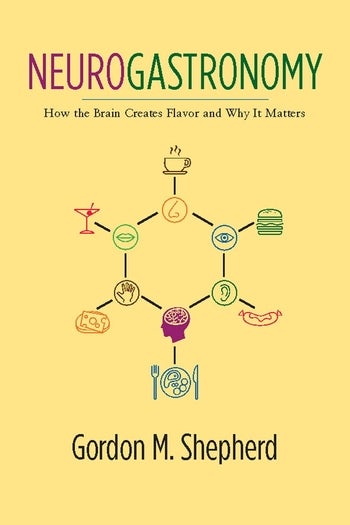
I am currently pouring through Neurogastronomy: How the Brain Creates Flavor and Why It Matters by Dr. Gordon M. Shepherd, the foundational text for the field of Neurogastronomy. While I don’t understand a lot of the technical details in the book (probably most), it is really helpful in visualizing sense maps when judging beer, cider, mead, food, or any other taste and aroma. Being mindful of retronasal olfaction (blowing air through your nose as you swallow food or drink) has been part of my BJCP and Cicerone® training from day one, so it’s fascinating that this is still cutting edge stuff. Sensors in the nose detect aroma, sensors in the mouth detect taste and mouth-sense, sensors in our ears detect sound, sensors in our eyes detect visuals, but our brains combine this jigsaw puzzle of senses also with memory to create an overall impression of flavor. Great stuff.
I am also working through the recently-updated 2021 BJCP Beer Style Guidelines. As described in Gordon Strong’s post about the new updates, while there are some new styles (e.g., Hazy IPA, Brut IPA, Catharina Sour), some renamed styles (Monastic instead of Trappist, Commercial Specialty Beer instead of Clone Beer), and some slight reorganization of styles (Gose to Sours, Kellerbier to Historial), the biggest changes are the updated Commercial Examples, updated History, and updates to the Sour Beer and Sweet Beer categories. BJCP typically updates their style guide every five years or so, previous editions were released in 2015, 2008, 2004, 1999, and 1997.
The 2021 Style Guidelines include 128 styles in 42 categories. Since the BJCP is focused on providing guidelines for homebrewers entering into competitions, and since it’s an all-volunteer organization, this is different than the annually-updated Brewers Association (BA) Great American Beer Festival Style Categories and semi-annual BA World Beer Cup Styles (176 styles in 103 categories for the upcoming 2022 competition).
Style guidelines serve multiple purposes:
- to help brewers know what categories to enter beers for judging,
- to help competition organizers know how to arrange flights and judges,
- to help judges systematically evaluate the beer and compare it to entered style.
Brewers are not limited to brewing to style by any means, and both organizations strive to be inclusive of all styles. The professional competition staff at the BA work with brewers, judges, and other stakeholders to annually review their guidelines, so they have expanded and contracted through the years. BA is also more responsive to commercial demands than BJCP. As the intro to the BJCP Style Guidelines indicates, it is not a history or how-to book, it is a reference for judging purposes. And those judging purposes extend to the BJCP and Cicerone® examinations, so the BJCP Style Guidelines are invaluable to folks like me.
I am also reading and re-reading the most recently updated Advanced Cicerone® Syllabus. As of August 1, 2022 all BJCP and Cicerone® exams will start using the updated 2021 BJCP Style Guidelines. The syllabi provided by the Cicerone® organization goes into detail on what to expect for the exams. It’s an invaluable tool, especially in parallel with two awesome and free resources from Advanced Cicerones®: Em Sauter’s Pints and Panels visual education and Chris Cohen’s new Beer Scholar video series.
Finally, I have to work on my written BJCP exam. Spending 90 minutes furiously handwriting five essays is going to take some practice. The BJCP Beer Exam Study Guide goes into details for the written exam on pages 22-36. I’ll need to know this guide backwards and forwards to succeed.
All in all, I hope the these resources are useful to someone out there who hasn’t come across them yet. If you know of a book that isn’t included on my list and should be, please let me know at muralbrewing@gmail.com. Cheers, and happy learning!
 Mural Brewing
Leave a comment